
PHOS

**** Disseminated on Behalf of First Phosphate

First Phosphate Announces Investment and Offtake Agreements under Critical Minerals Resilience and Production Alliance at G7 Summit
First Phosphate Announces Uplisting of American Depositary Receipt (ADR) to Nasdaq Global Market Under Ticker Symbol PHOS
First Phosphate Signs Agreement for a $16.7 Million Non-Repayable Contribution with the Government of Canada + plus CAD 4.84 million for the power and road infrastructure that will serve the mine.
Massive Loan Guarantees from the Investment Fund of Denmark and Italian Export Credit Agency (SACE)
Read the Investor Presentation HERE
________________________________
Hello Everyone,
We have something that you are going to want to take a look at for today's session. This is a brand new opportunity that already has a lot of credibility behind it. The company itself was just mentioned by name 2 months ago at the G7 Summit in France by Prime Minister Carney of Canada where the whole world was watching.
First Phosphate trades in two different forms, on two different markets, for two different investor bases.
Its common shares are Canadian-listed (on the CSE) and also trade over-the-counter in the U.S. on OTCQX under FRSPF — that's the standard route for a Canadian small-cap to give U.S. investors easy access without a full Nasdaq listing.
The Nasdaq is a separate, newer step that took place on Monday. The company uplisted its ADRs (American Depositary Receipts, each representing 10 common shares) from OTCQX to the Nasdaq Global Market under ticker PHOS. This gets it onto a major exchange with broader visibility, institutional eligibility, and stricter listing standards — useful for raising capital and credibility as it scales its LFP battery-material supply chain plans.
So every 1 share of PHOS is equal to 10 FRSPF. And how has FRPSF been doing? Take a look at the chart below. You will notice that this one was sitting down at .55 back in February. It just hit $1.37 last week, demonstrating that it is being stingy with its massive percentage gains.
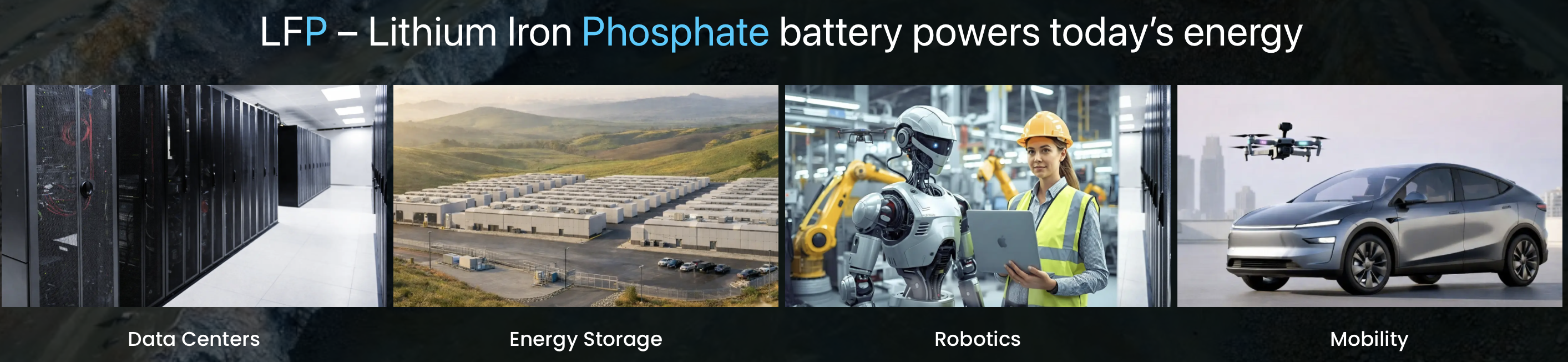
Data centers, energy storage, renewables, electric vehicles — The U.S. & Canada need battery storage. They want LFP batteries. North-America wants industrial sovereignty. But anyone serious about building the new energy system needs more than cell factories and political headlines. The real positions of power lie deeper in the supply chain: in the precursors, in refining, in the materials that ultimately decide whether ambitious goals translate into real production capacity.
The International Energy Agency reports that China controls nearly 85% of global cell-production capacity. For purified phosphoric acid used in LFP batteries, the share sits at around 75%.[1] Anyone who grasps that immediately understands why North America is no longer focused only on battery factories — but on raw materials and processing.
More importantly, the market is no longer growing only through electric vehicles. AI data centers are increasingly powered by green energy. Renewable supply is weather-dependent; AI demand is constant. The answer: battery storage.
The IEA now describes battery storage as the fastest-growing power technology in the world. In 2025, 108 gigawatts of new battery storage were installed globally — 40% more than the previous year. Installed capacity now stands at eleven times the 2021 level.[1] At the same time, lithium iron phosphate (LFP) batteries continued their march to dominance: they now account for more than half of all electric-vehicle batteries and for around 90% of battery-storage deployments worldwide.[1] The market is rapidly converging on a chemistry that is cheap, robust, safe, and highly scalable industrially.
With LFP becoming the standard storage chemistry, a raw material is moving to center stage that is still discussed far less on the markets than lithium: high-purity phosphate, and the purified phosphoric acid (PPA) made from it for battery applications. The IEA already warns that a bottleneck could form here — and that today's pipeline of projects will likely fall short of demand around 2030.[2] That is precisely the gap First Phosphate is positioning into: with rare igneous phosphate from Québec, with a clear focus on LFP rather than fertilizer, with a vertical-integration strategy, and with European technology, engineering, and financing partners. For investors, this is not just another commodity name — it is a stock attacking exactly where a strategic chokepoint is forming.
First Phosphate Emerges as a G7-Backed Critical Minerals Champion
First Phosphate (Nasdaq: PHOS | CSE: PHOS | OTCQX: FRSPF | FSE: KD0) continues to distinguish itself as one of North America's most strategically important critical-minerals developers following new investment and offtake agreements that place the company directly within the framework of the G7 Critical Minerals Resilience and Production Alliance. The company describes it as the strongest institutional endorsement in its history, positioning First Phosphate as a mine-to-market solution for securing Western lithium iron phosphate (LFP) battery supply chains and reducing reliance on concentrated foreign sources.
The significance of the announcement extends well beyond a typical corporate update.
At the 52nd G7 Leaders' Summit in Évian, France on June 17, 2026, the Government of Canada highlighted First Phosphate as one of a select group of critical-minerals initiatives receiving support from international partners. The project now benefits from coordinated support across five jurisdictions: Canada, Denmark, Italy, Belgium, and the European Union. Denmark's export-credit agency, EIFO, has issued a letter of interest for a guarantee of up to C$275 million for the Bégin-Lamarche mine, while Italy's SACE, Cassa Depositi e Prestiti and SIMEST, alongside engineering group MAIRE (Euronext Milan; approximately US$5 billion market capitalization), are supporting the downstream phosphoric-acid facility at Port Saguenay.[10]
The Bégin-Lamarche mine was specifically referenced by Canada's Minister of Energy and Natural Resources, Tim Hodgson, in the Prime Minister's Office announcement, and a concurrent Canada-Italy Critical Minerals Partnership provides a formal bilateral framework supporting the project's development.[10] With LFP batteries now identified alongside rare earths and semiconductors as one of the most strategically important supply chains, First Phosphate has positioned itself as a flagship G7-backed phosphate platform for North America and Europe's energy transition.
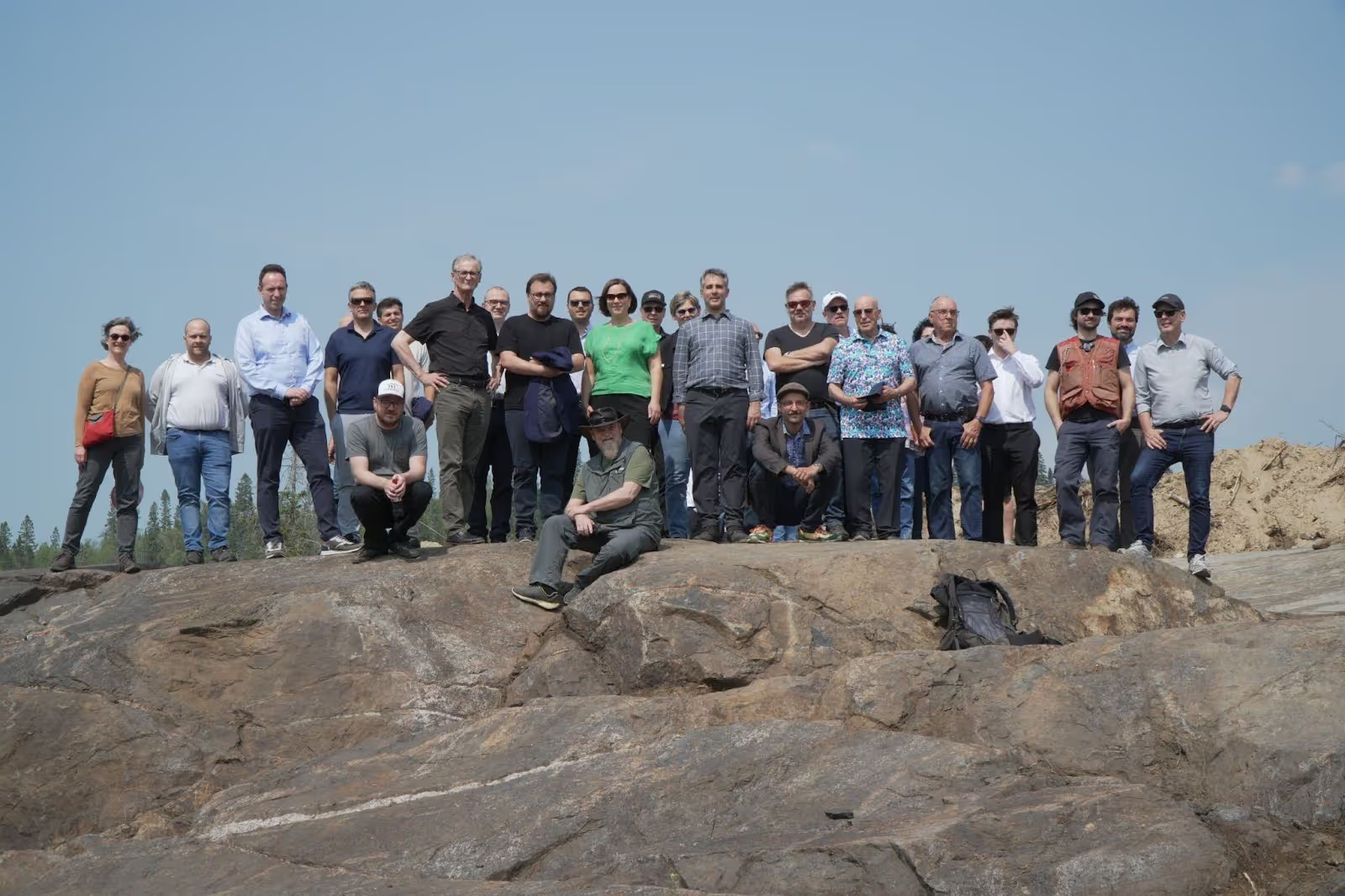
Why First Phosphate Stands Out
- LFP-focused, not fertilizer-focused. First Phosphate targets high-purity phosphate for the LFP battery industry — extraction and purification specifically for cathode active material.[3]
- Bégin-Lamarche is an unusually large igneous phosphate project in Québec: 204.7 Mt measured and indicated at 6.05% P₂O₅ and 89.5 Mt inferred at 6.16% P₂O₅.[9]
- Strong PEA economics. After-tax NPV of CAD 1.59 billion (8% discount rate), after-tax IRR of 33%, payback in 2.9 years, a planned 23-year mine life, and projected peak annual revenue of approximately US$362 million.[3]
- Production scale that competes in a different league. The PEA assumes 900,000 t of phosphate concentrate per year — equivalent, per company materials, to roughly 350 GWh of LFP batteries or 700,000 t of cathode active material annually.[3]
- Value creation does not stop at the mine. First Phosphate plans a vertical chain from concentrate through purified phosphoric acid to precursors and battery materials.[5]
- Europe is already visibly anchored in the project. A European world leader in merchant-grade phosphoric-acid technology is providing the license, a Milan-based engineering firm has been selected for execution, and UK-based Integrals Power is engaged in LFP precursors.[5]
- Substantially scaled phosphoric-acid plant. Design capacity of 600 t/day of P₂O₅ product, with potential of up to 190,000 t of phosphoric acid per year.[5]
- Denmark issued a strong signal. EIFO, the Danish export-credit agency, has issued a letter of interest for a guarantee of up to C$275 million — a substantial international validation.[10]
- The Government of Canada has committed more than CAD 21.5 million across two Natural Resources Canada programs: CAD 16.7 million for battery-grade phosphate-concentrate development and processing engineering, plus CAD 4.84 million for the power and road infrastructure that will serve the mine.[7][13]
- Québec has put the project on a fast track. Bégin-Lamarche was selected in July 2026 for "Filon" fast-track support status with the Québec Ministry of Natural Resources and Forests, under the province's Strategy for the Development of Critical and Strategic Minerals 2025-2031.[12]
- Management has skin in the game. Roughly 20% insider ownership, with additional open-market purchases by executives and directors.
Europe Talks Batteries — China Controls the Machine Behind Them
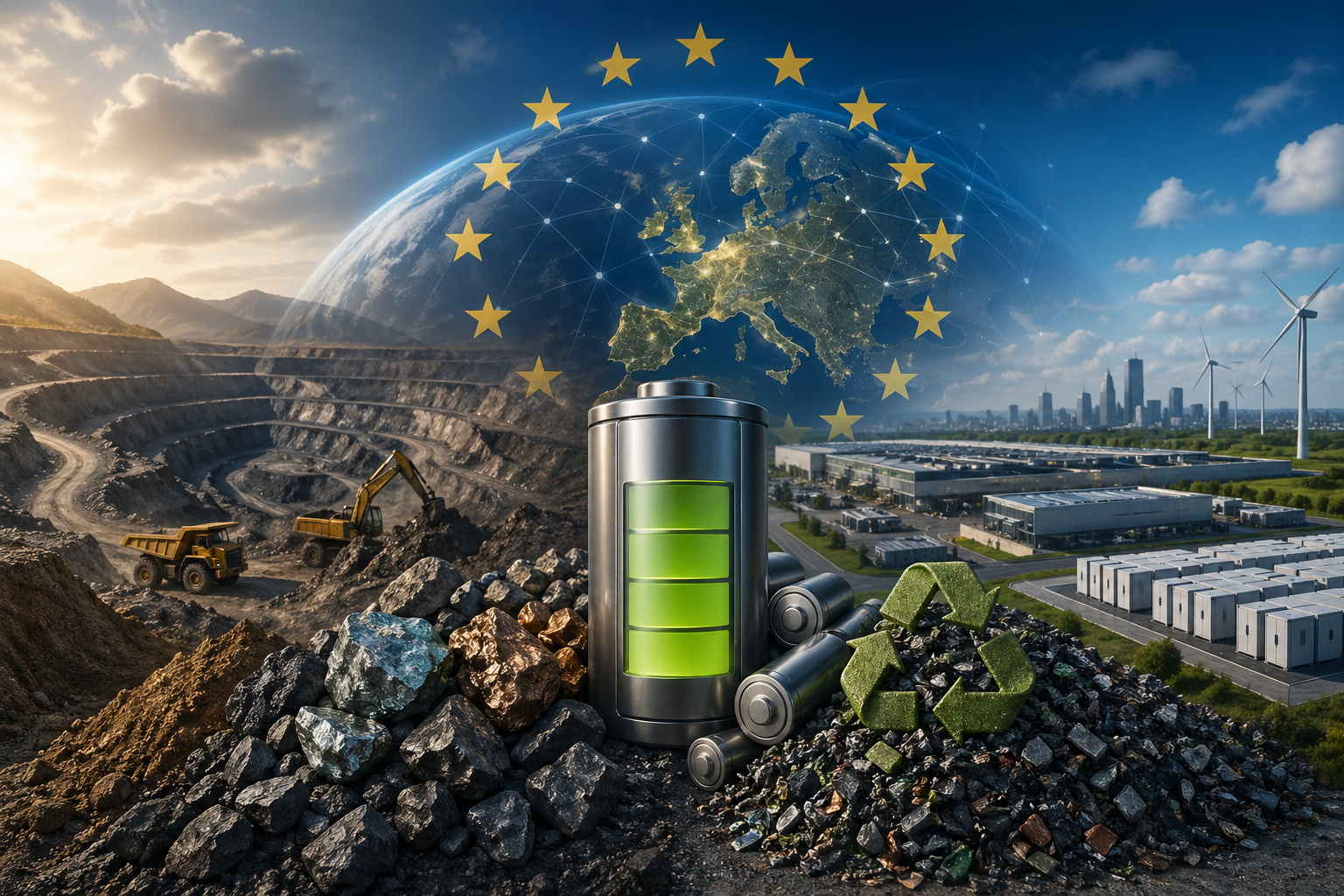
European battery policy looks decisive at first glance. Critical-raw-materials laws, industrial packages, subsidy debates, gigafactory plans, storage targets, reindustrialization. The reality is harder. The European Commission did not arbitrarily decide, in the Critical Raw Materials Act, that by 2030 the EU should mine at least 10%, process 40%, and recycle 25% of its annual demand for strategic raw materials, while limiting reliance on any single third country to no more than 65%.[8] These numbers are an explicit admission: Europe remains too dependent on critical raw materials and precursors.
This dependence is not an abstract administrative matter. It decides whether Europe stays a buyer or returns to being a producer in the next industrial phase. The IEA describes China not just as a major supplier, but as the dominant pacesetter of the battery supply chain. In several mid- and downstream battery segments, China's share is 80% or higher — for LFP cathode materials, the IEA puts it at over 98%.[2] That is not a comfortable starting position for a continent that simultaneously wants to stabilize power grids, secure industrial production, supply data centers, and roll back strategic dependencies.
The picture sharpened further with China's tightened export controls in 2025. The IEA has noted that new restrictions on battery materials, technologies, and equipment make supply-chain vulnerability not merely visible but real.[2]
For North-America & Europe, the message is clear: anyone serious about the battery transition needs a more robust raw-material and precursor base. Not eventually. Now.
Why Battery Storage Triggers the Next Wave
Many investors still think first of electric cars when the battery market comes up. That misses the point. The next big wave is forming where electricity has to be stored, shifted, and made available on demand — not just generated. Wind and solar are growing globally at extraordinary speed. At the same time, electricity demand is rising from data centers, artificial intelligence, industrial automation, charging infrastructure, heat pumps, and digital networks. The result: power systems need ever more flexibility. This is exactly where battery storage becomes a key technology.
Renewables don't automatically produce when consumption peaks. Solar generates during the day; load peaks often hit morning and evening. Wind fluctuates with weather. Grids have to absorb short-term load peaks, stabilize frequency, hold reserves, and absorb surplus energy. Without storage, the renewables build-out becomes more expensive, more complex, and less efficient. With storage, electricity becomes more predictable, more tradable, and more usable industrially.
That is why the market is now scaling at high speed. Battery storage is no longer a complement to the energy transition — it is its own infrastructure category, sitting alongside power plants, grids, substations, and data centers.
The market is broadening. It is no longer just about how many electric cars get sold. It now also includes:
- Grid-scale storage
- Large storage parks
- Industrial-site battery systems
- Data-center backup
- Charging hubs
- Telecommunications
- Defense
- Ports
- Mines
- Factories
- Critical infrastructure
This breadth is what makes the market so powerful: once batteries become standard equipment in modern power systems rather than just a mobility component, a structural demand block emerges that can grow for many years.
LFP Becomes the Standard Chemistry — and the Raw-Material Map Changes With It
A few years ago, lithium iron phosphate was treated as a sideshow outside China. That phase is over. The IEA reports that LFP now accounts for nearly half of all electric-car batteries globally, up from less than 10% in 2020.[2] That is a shift of historic proportions — and it changes not just battery factories, but the entire raw-material logic behind them.
Why is LFP winning so decisively? Because the chemistry looks almost ideal for industrializing the energy transition. It is cheaper than nickel-rich alternatives, safer in use, robust over many cycles, and especially attractive for stationary storage. According to the IEA, LFP batteries are typically cheaper and better suited to frequent cycling, which has helped make them the default for storage projects.[1] Anyone aiming to be a cost leader looks at LFP. Anyone rolling out storage at scale looks at LFP. Anyone trying to build Western supply chains cannot avoid LFP.
That is exactly what makes First Phosphate (Nasdaq: PHOS | CSE: PHOS | OTCQX: FRSPF | FSE: KD0) interesting. The company is not betting on a niche; it is betting on the chemistry that is becoming the industrial standard. Many commodity names benefit only indirectly from future trends — First Phosphate sits squarely in an area that gains importance with every additional gigawatt-hour of storage and every new LFP production line.
The Underestimated Bottleneck Is Called Phosphate — Not Just Lithium
On the markets, attention typically goes to lithium, nickel, cobalt, or graphite. That blocks out a central reality: in LFP, phosphate is not a side ingredient — it is core. LFP cathode powder consists of roughly 61% phosphate, 35% iron, and only 4% lithium. The market often fixates on the smaller, louder part of the formula and overlooks the larger, quieter lever.
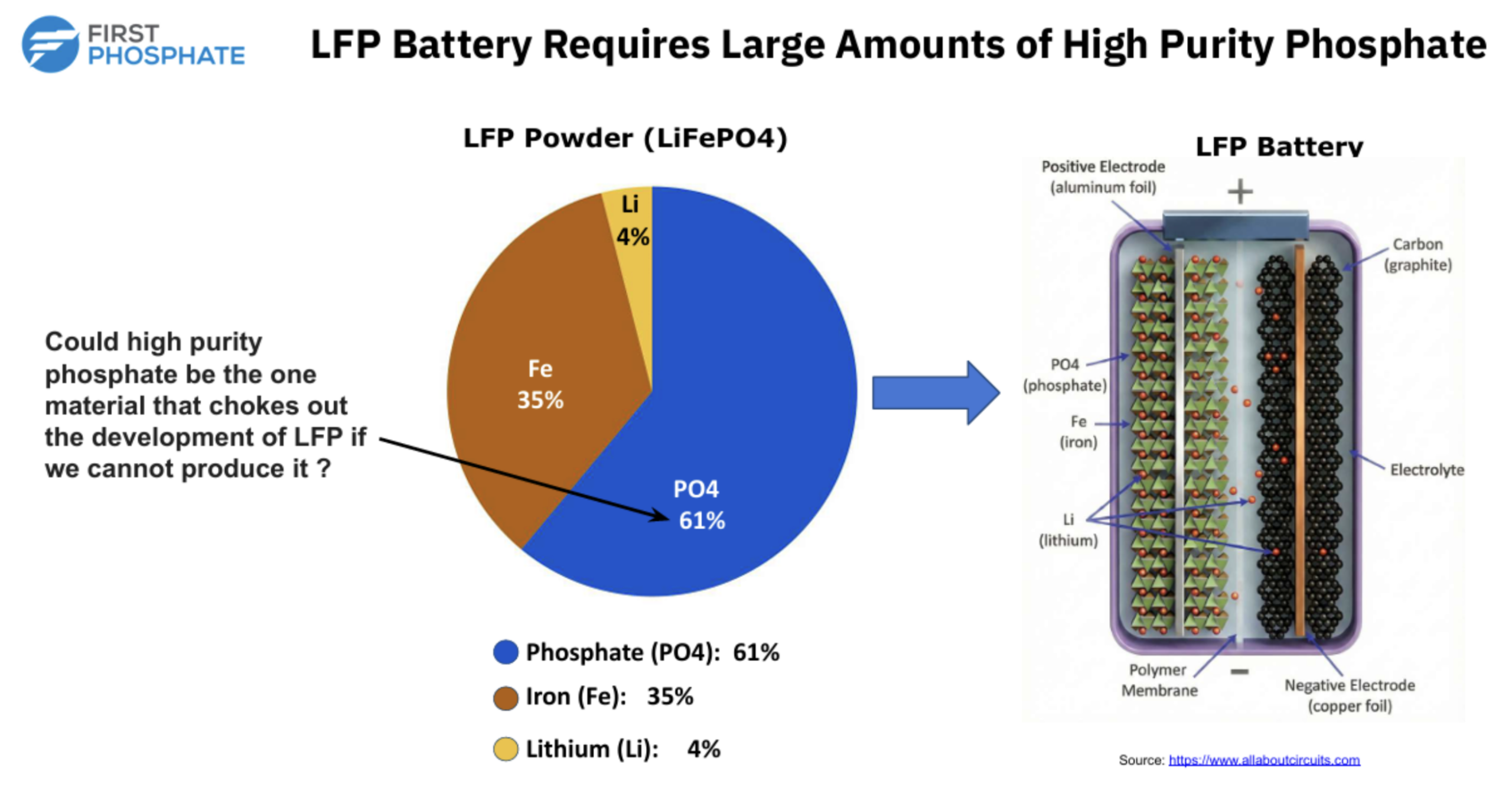
Even more important is the refining stage. The IEA has explicitly warned that the conversion of phosphate rock into battery-grade purified phosphoric acid (PPA) is becoming a growing potential bottleneck for LFP and manganese-enriched successor chemistries, with a PPA deficit anticipated as early as 2030.[2] At the same time, China produces around 75% of global purified phosphoric acid. Putting those numbers side by side shows why First Phosphate's target market can be far larger than current pricing reflects.
This is the strategic core of the stock: First Phosphate is not trying to sell just any phosphate. The company aims to bring high purity igneous phosphate into a supply chain where purity, processing depth, and battery application make the difference. That is where value gets created — and where scarcity becomes visible. That is also where the larger leverage may open up in the cycle ahead.
Why Igneous Phosphate Can Be a Real Edge
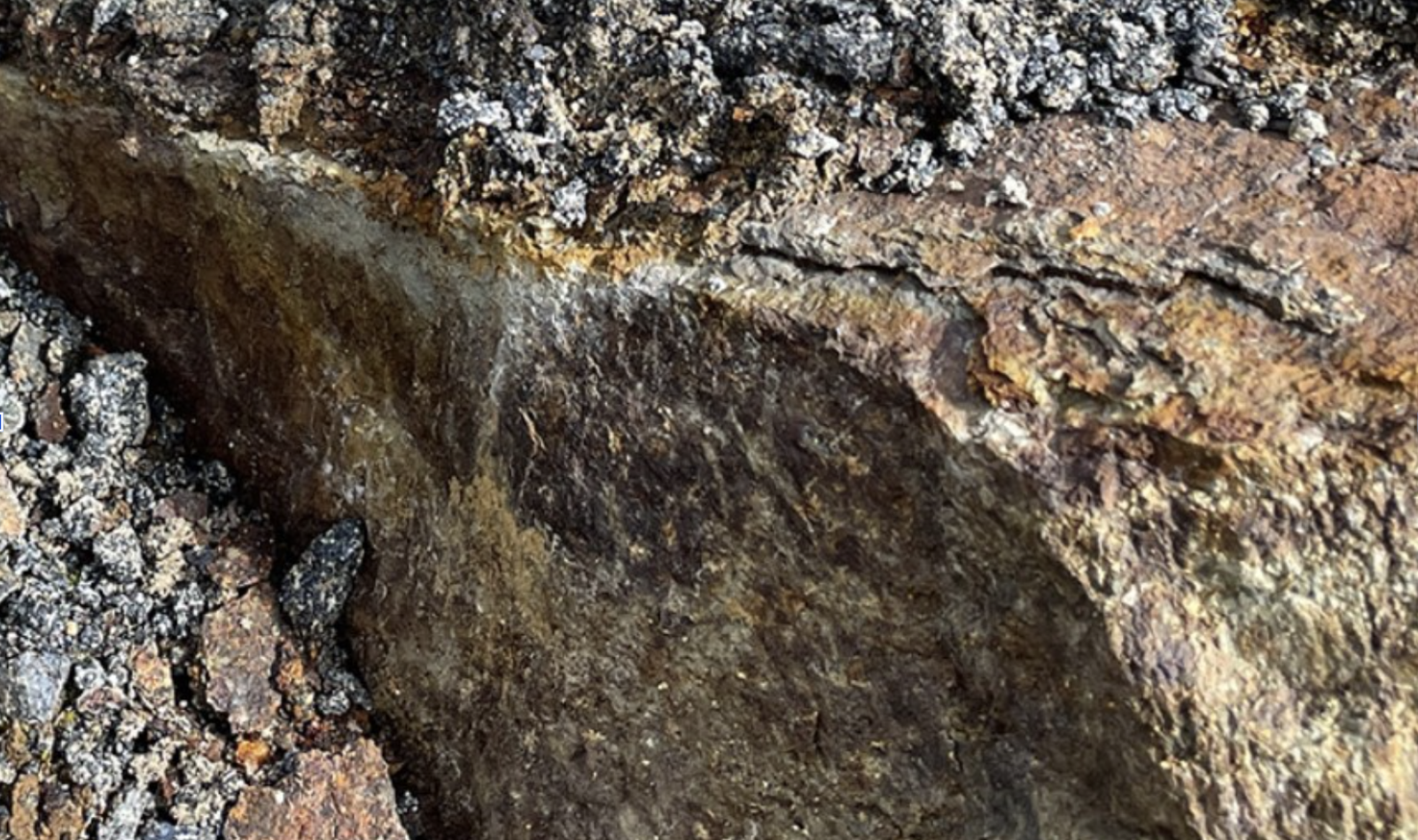
Not all phosphate is created equal. First Phosphate (Nasdaq: PHOS | CSE: PHOS | OTCQX: FRSPF | FSE: KD0) stands out on a point that can be decisive for industrial buyers: a focus on igneous phosphate — phosphate sourced from igneous rock. Only about 5% of global phosphate deposits are of igneous origin. Such material delivers a substantially better starting point for high-grade phosphoric acid — and therefore for battery applications — than sedimentary deposits oriented toward fertilizer. According to First Phosphate, the Bégin-Lamarche deposit is capable of converting over 90% of its phosphate into battery-grade phosphoric acid, far exceeding what typical sedimentary deposits achieve.
To investors that may sound like geology. To industry, it is plain economics. When the raw material yields a higher-grade concentrate, and that concentrate yields a cleaner phosphoric acid, the entire economic profile of a project shifts. The deposit type is the precondition for purity, processability, and downstream value creation.
This is also why First Phosphate can speak to a different category of investors than classic phosphate names. Many phosphate companies remain mentally anchored in the fertilizer market. First Phosphate anchors itself in the conversation about batteries, storage, industrial security, and Western supply chains. That broadens not just strategic relevance, but also the valuation window.
The company is not a pure explorer hunting for an unproven deposit. It is a developer of a vertical supply chain. The focus is not just the mine, but the chain from rock to high-purity concentrate to purified phosphoric acid to iron-phosphate precursors and, ultimately, cathode active material and battery cells.[4]
That has two big advantages for investors. First, the value lever grows. Selling raw material keeps you close to the commodity cycle; growing into higher-value precursors raises your share of the industrial margin. Second, the company becomes more strategically interesting. In a world where Europe and North America are searching for reliable LFP supply chains, a developer with processing ambition is markedly more relevant than a pure rock supplier.
Then there is location. Within North America, Québec has long been one of the most important battery corridors. Proximity to main highways, the deep-water Port of Saguenay at roughly 70 km, established rail access, hydroelectric power, available industrial sites, and proximity to North American markets all match the project's strategic logic and position the company to advance toward production with reduced capital intensity.
Bégin-Lamarche Is the Heart — and the Numbers Have Weight
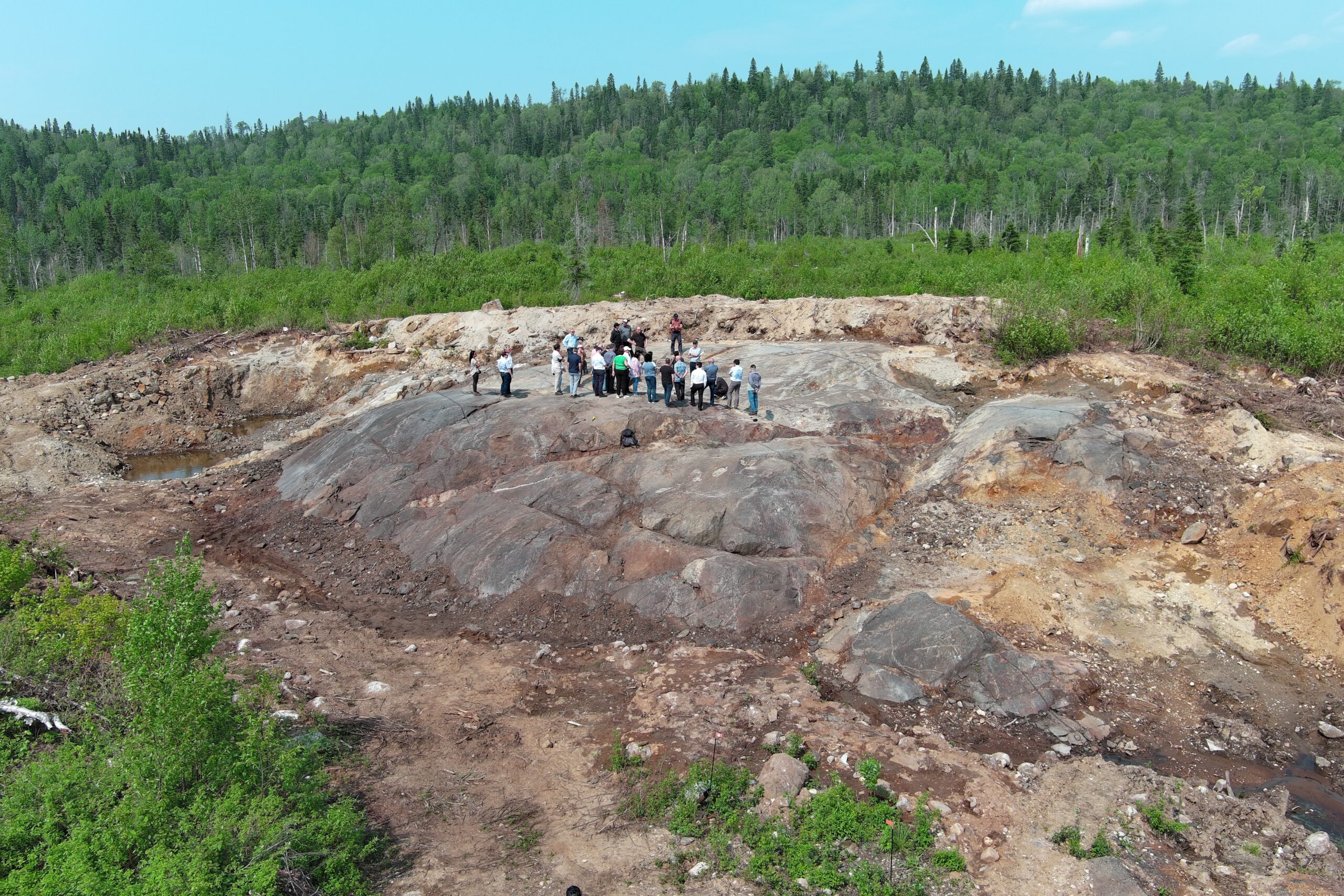
Bégin-Lamarche is not just the flagship; it is the asset around which the valuation lever concentrates. The deposit spans four zones with 204.7 Mt measured and indicated at 6.05% P₂O₅ and 89.5 Mt inferred at 6.16%. Mineralization starts at surface, extends to roughly 250 m depth, and remains open at depth.[9] These are figures that demand attention.
The PEA delivers the matching foundation. It assumes an annual average of 900,000 t of phosphate concentrate at 40% P₂O₅ and 380,000 t of magnetite. Even more striking is the financial scale: an after-tax NPV of CAD 1.59 billion at an 8% discount rate, an after-tax IRR of 33%, a payback of 2.9 years, and projected peak annual revenue of approximately US$362 million.[3] Such metrics are why Bégin-Lamarche can be more than an early exploration story. This asset has industrial scale.
The company connects production volumes directly to the LFP market. Planned annual output is in the order of 350 GWh of LFP batteries or 700,000 t of cathode active material. Even on conservative assumptions, the message is unambiguous: the project is large enough to play in a meaningful slice of the Western LFP supply chain.
Québec Has Put the Project on a Fast Track
A deposit only becomes a mine once the authorizations follow. That is where projects usually lose the most time, and that is where Bégin-Lamarche received a concrete accelerant in July 2026. First Phosphate was selected for "Filon" fast-track support status with the Québec Ministry of Natural Resources and Forests for its Bégin-Lamarche igneous rock phosphate project in Saguenay-Lac-Saint-Jean.[12]
The support is aimed at accelerating the project's key development milestones and at facilitating discussions with the government departments and agencies responsible for issuing mining authorizations and permits. Filon was announced under the Québec Strategy for the Development of Critical and Strategic Minerals 2025-2031, which targets critical and strategic mineral projects in the province.[12]
For investors, this is more than an administrative footnote. It means the province has formally identified Bégin-Lamarche as one of the projects it wants moved forward, and it acts directly on the timeline rather than only on the balance sheet. Stacked on top of federal funding and international guarantee interest, it means all three levels that matter for a Canadian mine build, the Province of Québec, the Government of Canada, and the company's international partners, are pointing the same way.
A Nasdaq Listing Opens the U.S. Door Wider
It is worth being precise about what this is and is not. No new shares are being issued and no capital is being raised; the uplisting is a change of venue, not a financing.[14] What changes is who can reach the stock. A great many U.S. institutions, funds and brokerage platforms either cannot or will not trade over-the-counter securities. A senior U.S. exchange removes that filter. For a developer that has spent the past year assembling government funding, an export-credit guarantee and signed offtakes, the listing is the market-access layer catching up to the project.
The timing is also telling. The uplisting lands weeks after the G7 offtake agreements and the federal infrastructure funding, at the point where a company positioning itself as a Western LFP supply-chain asset needs to be visible to the investors who fund exactly that. Shareholders can continue converting common shares into ADRs at no cost through BNY until December 31, 2026.[14]
First Phosphate Announces Investment and Offtake Agreements under Critical Minerals Resilience and Production Alliance at G7 Summit
Saguenay–Lac-Saint-Jean, Québec – June 17, 2026 – First Phosphate Corp. (“First Phosphate” or the “Company”) (CSE: PHOS) (OTCQX: FRSPF) (OTCQX ADR: FPHOY) (FSE: KD0) is pleased to announce that it has formalized international investment and offtake agreements under the Critical Minerals Resilience and Production Alliance (the “Alliance”) at the 52nd G7 Summit in Évian, France.
Letters of interest:
Within the framework of the Alliance, First Phosphate is also pleased to announce that it has received letters of interest (“LOIs”) from export credit agencies, financial institutions and industrial partners:
- LOI for up to CDN $275M guarantee from the Export and Investment Fund of Denmark (“EIFO”) for the development of the First Phosphate Bégin-Lamarche mine. (signed March 30, 2026)
- LOIs from the Italian Export Credit Agency (“SACE”), from Italy’s National Promotional Institution, Cassa Depositi e Prestiti (“CDP”), and from the international growth partner for Italian companies (“SIMEST”), alongside the support of the Italian engineering group MAIRE (“MAIRE”), in relation to First Phosphate’s phosphoric acid (“PA”) plant at Port Saguenay to deploy Ballestra S.p.A (Italy) (“Ballestra”) technology. (LOIs signed between May 26, 2026 – June 4, 2026)
Offtake Agreements:
- Definitive offtake agreement with an international partner for a minimum of 200,000 tonnes per annum of phosphate concentrate from the Bégin-Lamarche mine. (signed January 5, 2026).
- Definitive offtake agreement with an international partner for a minimum of 60,000 tonnes per annum of phosphoric acid to be produced by the phosphoric acid plant at Port Saguenay. (signed December 16, 2024)
“Canada has what the world wants, and we are delivering. By working with trusted allies through the Critical Minerals Resilience and Production Alliance, investments are being made, projects are coming online faster, and we are strengthening supply chains in Canada and beyond,” said the Honourable Tim Hodgson, Canada’s Minister of Energy and Natural Resources. “By advancing projects like the Bégin-Lamarche mine, we’re securing the materials essential to the clean energy transition, creating good Canadian Jobs, and positioning Canada as a leader in an increasingly competitive global economy.”
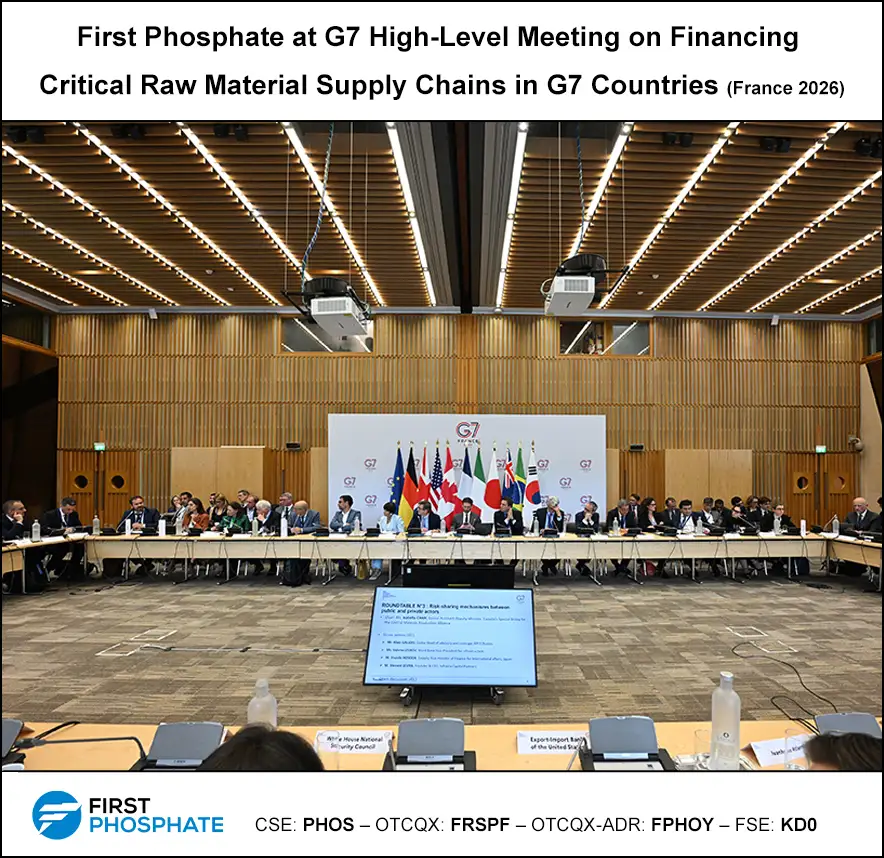
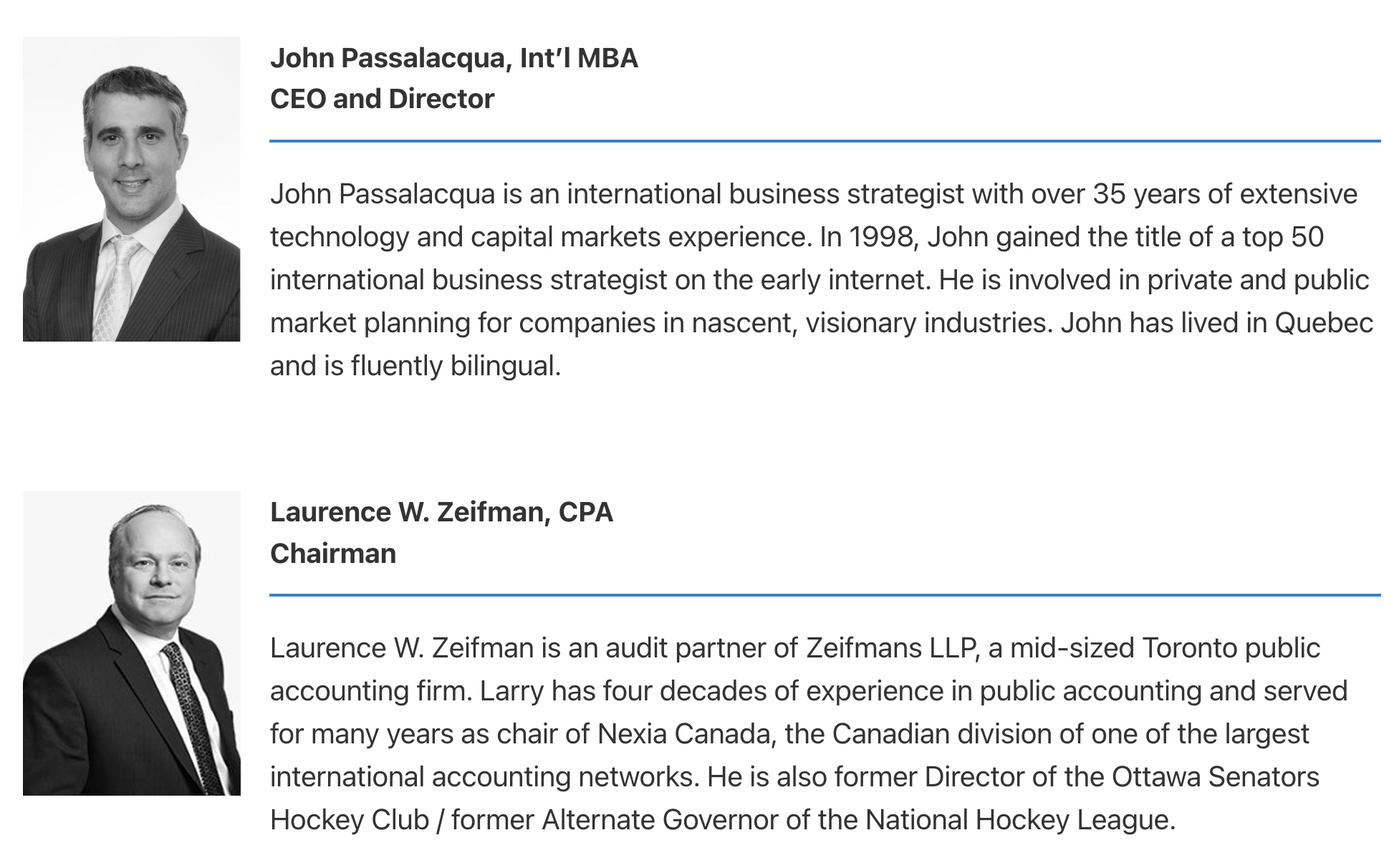
“These offtake and investment agreements announced under the Critical Minerals Resilience and Production Alliance at the 2026 G7 Summit demonstrate the strategic importance being assigned to establishing a secure, traceable and robust international supply chain for critical battery-grade phosphate material,” stated John Passalacqua, CEO of First Phosphate. “We are proud to lead the G7 in the development of this clean, rare igneous phosphate material from Saguenay-Lac-St-Jean, Quebec into a downstream lithium iron phosphate (“LFP”) battery supply chain for the G7 Alliance.”
Qualified Person
The scientific and technical information relating to First Phosphate contained in this press release has been reviewed and approved by Steeve Lavoie, P.Geo., Chief Geologist of First Phosphate, who is Qualified Person within the meaning of National Instrument 43-101 – Standards of Disclosure for Mineral Projects (“NI 43-101”).
About the Critical Minerals Resilience and Production Alliance
The Critical Minerals Resilience and Production Alliance was launched by Prime Minister Carney in June 2025 at the 51st G7 Leaders’ Summit in Kananaskis, Alberta. It brings trusted countries together to diversify critical minerals supply, promote responsible development, and reduce market concentration. The Alliance helps critical minerals projects move from planning to production faster by connecting governments, investors, and companies unlocking financing; securing investment; and supporting offtake agreements with long‑term buyers, reducing risk so that mining and processing projects can get built and deliver secure, reliable supply.
About Export and Investment Fund of Denmark (EIFO)
EIFO is the Danish export credit agency backed by the Danish state, and as such, the EIFO guarantee can be considered AAA rated. The guarantee can be provided to one or more banks providing the funding and EIFO participation can be expected to be pro rata and pari passu with other senior lenders. EIFO has been involved in the financing of a significant number of transactions and projects around the world and has extensive experience within the field of export and project finance.
About Italian Export Credit Agency (SACE)
SACE is Italy’s Export Credit Agency, wholly owned by the Ministry of Economy and Finance. It specializes in supporting the growth of Italian companies through a wide range of instruments and solutions to foster exports and competitiveness, including risk management and protection, financial guarantees, factoring, advisory services, and business matching. With a network of export advisors across 23 offices in Italy and in high-potential markets for Made in Italy, SACE manages a portfolio of insured operations and guaranteed investments worth around €290 billion across 200 markets worldwide.
About Cassa Depositi e Prestiti (CDP)
Cassa Depositi e Prestiti is the National Promotional Institute which has been supporting the Italian economy since 1850. The main goal of CDP is to accelerate the industrial and infrastructural development of Italy to boost its economic and social growth. CDP focuses its activities on sustainable development at local level, supporting the innovation and growth of Italian enterprises, also in the international arena. It partners local authorities, in a financing and advisory capacity, to create infrastructures and improve services of public value. CDP also participates actively in international cooperation initiatives to realize projects in developing countries and emerging markets. Cassa Depositi e Prestiti is entirely financed by private capital, through the issuing of Postal Savings Bonds and Postal Savings Passbooks, and through issues on national and international financial markets.
About Società Italiana per le Imprese all’Estero (SIMEST)
SIMEST is the Cassa Depositi e Prestiti Group company that has been supporting Italian businesses since 1991 as they grow through internationalisation. SIMEST supports businesses throughout their international expansion process, from the initial evaluation to enter a new market, to expansion through direct investments. It operates through loans for international expansion, export credit assistance and equity investments in companies.
About MAIRE Group
MAIRE S.p.A. (EURONEXT MILAN: MAIRE IM) is a leading engineering group providing technology solutions and project execution in the downstream segment of energy services, as well as in the chemicals and fertilizers industries. The Group operates through two business units: Integrated E&C Solutions and Sustainable Technology Solutions, the latter active in sustainable fertilizers, low carbon energy vectors, and innovative materials and circular solutions. With operations in around 50 countries, MAIRE employs over 10,800 people. For further information: www.groupmaire.com
About Ballestra S.p.A
Ballestra S.p.A. is an Italian engineering company active in the licensing, design and engineering of processing plants, as well as in the supply of proprietary technologies and equipment for the chemical industry, including detergents, surfactants, phosphate- and potassium-based fertilizers, fluorine derivatives and gas-liquid reactions. Leveraging its know-how in sulfuric and phosphoric acid, it supports the processing of critical raw materials, with applications in lithium-ion batteries and in the metals and mining industries. Recently acquired by NEXTCHEM (subject to closing), part of MAIRE Group, it operates in over 120 countries and employs approximately 450 people.
NEWS
August 7, 2026
First Phosphate Announces Uplisting of American Depositary Receipt (ADR) to Nasdaq Global Market Under Ticker Symbol PHOS
Read More »
August 5, 2026
First Phosphate Signs Agreements for $4.84 Million Non-Repayable Contributions with the Government of Canada for Road Infrastructure and Power Transmission Line
Read More »
July 27, 2026
First Phosphate Selected for “Filon” Fastrack Status with the Québec Ministry of Natural Resources and Forests
Read More »
July 13, 2026
First Phosphate Closes Final Tranche of Oversubscribed Private Placement
Read More »
June 17, 2026
First Phosphate Announces Investment and Offtake Agreements under Critical Minerals Resilience and Production Alliance at G7 Summit
Read More »
June 15, 2026
First Phosphate Closes Oversubscribed Private Placement to Existing and Follow-on Investors
Read More »
May 28, 2026
First Phosphate Announces Non-Brokered Private Placement to Accommodate Existing Investors
Read More »
May 26, 2026
First Phosphate Reports Updated Mineral Resource Estimate for Bégin-Lamarche Phosphate Deposit
Read More »
May 18, 2026
First Phosphate Announces Engagement of Investor Relations Firm
Read More »
MANAGEMENT
Sources & References
- [1] International Energy Agency — Global Energy Review 2026: Battery Storage (Apr 2026) — https://www.iea.org/reports/global-energy-review-2026/technology-battery-storage
- [2] International Energy Agency — Global Critical Minerals Outlook 2025: Beyond NMC Batteries — Supply Chain Issues for Emerging Battery Technologies — https://www.iea.org/reports/global-critical-minerals-outlook-2025/beyond-nmc-batteries-supply-chain-issues-for-emerging-battery-technologies
- [3] First Phosphate Corp. — Positive PEA Results, Bégin-Lamarche Property (Dec 4, 2024) — https://firstphosphate.com/first-phosphate-announces-positive-results-of-preliminary-economic-assessment-at-its-begin-lamarche-property-in-saguenay-lac-saint-jean-quebec-canada/
- [4] First Phosphate Corp. — Bégin-Lamarche Project Page (PEA Highlights & 3D Model) — https://firstphosphate.com/projects/begin-lamarche-3/
- [5] First Phosphate Corp. — License Agreement with Prayon SA & Ballestra S.p.A. Engagement (Dec 2, 2024) — https://firstphosphate.com/first-phosphate-corp-signs-license-agreement-with-prayon-sa-global-leader-in-mga-phosphoric-acid-technology/
- [6] EIFO — Letter of Intent: Guarantee of up to EUR 170 Million for First Phosphate (Apr 13, 2026) — https://www.newsfilecorp.com/release/292070/EIFO-Denmarks-Export-Credit-Agency-Issues-Letter-of-Intent-for-a-Guarantee-of-up-to-EUR-170-Million-for-the-First-Phosphate-Igneous-Phosphate-Mining-Project
- [7] First Phosphate Corp. — CAD 16.7 Million Non-Repayable Contribution from the Government of Canada (Mar 16, 2026) — https://firstphosphate.com/first-phosphate-signs-agreement-for-a-16-7-million-non-repayable-contribution-with-the-government-of-canada/
- [8] European Commission — Critical Raw Materials Act: 2030 Benchmarks (10% extraction / 40% processing / 25% recycling / 65% single-country cap) — https://single-market-economy.ec.europa.eu/sectors/raw-materials/areas-specific-interest/critical-raw-materials/critical-raw-materials-act_en
- [9] First Phosphate Corp. — Updated Mineral Resource Estimate, Bégin-Lamarche Property (May 26, 2026; effective date May 1, 2026; Qualified Person: Antoine Yassa, P.Geo., P&E Mining Consultants Inc.) — https://firstphosphate.com/begin-lamarche-phosphate-resource-update-2026/
- [10] First Phosphate Corp. — Investment and Offtake Agreements under Critical Minerals Resilience and Production Alliance at G7 Summit (Jun 17, 2026) — https://firstphosphate.com/first-phosphate-g7-investment-offtake-deals/
- [11] First Phosphate Corp. — Closes Oversubscribed Private Placement to Existing and Follow-on Investors (Jun 15, 2026) — https://firstphosphate.com/first-phosphate-closes-oversubscribed-private-placement-to-existing-and-follow-on-investors/
- [12] First Phosphate Corp. — Bégin-Lamarche Selected for "Filon" Fast-Track Support Status with the Québec Ministry of Natural Resources and Forests (Jul 27, 2026) — https://firstphosphate.com/first-phosphate-filon-fast-track-quebec/
- [13] First Phosphate Corp. — Signs Agreements for $4.84 Million Non-Repayable Contributions with the Government of Canada for Road Infrastructure and Power Transmission Line (Aug 5, 2026) — https://firstphosphate.com/first-phosphate-canada-infrastructure-funding-2026/
- [14] First Phosphate Corp. — Announces Uplisting of American Depositary Receipt (ADR) to Nasdaq Global Market Under Ticker Symbol PHOS (Aug 7, 2026) — https://firstphosphate.com/first-phosphate-announces-uplisting-of-american-depositary-receipt-adr-to-nasdaq-global-market-under-ticker-symbol-phos/
Sincerely,

DISCLAIMER
THIS WEBSITE/NEWSLETTER IS A PUBLICATION OF ONE22 MEDIA, LLC, HEREIN REFERRED TO AS O22. O22’S REPORTS/RELEASES ARE A COMMERCIAL ADVERTISEMENT AND ARE FOR GENERAL INFORMATIONAL PURPOSES ONLY.O22 IS ENGAGED IN THE BUSINESS OF MARKETING AND ADVERTISING COMPANIES FOR MONETARY COMPENSATION.
O22 HAS BEEN COMPENSATED A FEE OF TWENTY TWO THOUSAND USD BY A THIRD PARTY, LFG EQUITIES CORP FOR A ONE DAY PHOS PROFILE 8/13/26.
BY SUBSCRIBING TO OR OTHERWISE USING THIS WEBSITE/NEWSLETTER, YOU AGREE TO HOLD O22 AND ITS OPERATORS, OWNERS, AND EMPLOYEES HARMLESS AND TO COMPLETELY RELEASE THEM FROM ANY AND ALL LIABILITY DUE TO ANY AND ALL LOSS, DAMAGE, OR INJURY THAT YOU MAY INCUR, MONETARY OR OTHERWISE.
INVESTING IN MICRO-CAP AND GROWTH SECURITIES IS HIGHLY SPECULATIVE AND CARRIES AN EXTREMELY HIGH DEGREE OF RISK. NEVER INVEST IN ANY STOCK FEATURED ON O22’S SITE OR NEWSLETTER UNLESS YOU CAN AFFORD TO LOSE YOUR ENTIRE INVESTMENT. THE DISCLAIMER IS TO BE READ AND FULLY UNDERSTOOD BEFORE USING O22’S SERVICES, JOINING O22’S SITE OR EMAIL/BLOG LIST, OR FOLLOWING ANY SOCIAL NETWORKING PLATFORMS O22 MAY USE.
PLEASE NOTE WELL: O22 IS NOT A REGISTERED INVESTMENT ADVISOR, BROKER DEALER OR A MEMBER OF ANY ASSOCIATION FOR OTHER RESEARCH PROVIDERS IN ANY JURISDICTION WHATSOEVER. O22 IS NOT AFFILIATED WITH ANY EXCHANGE, ELECTRONIC QUOTATION SYSTEM, THE SECURITIES AND EXCHANGE COMMISSION, OR FINRA. NONE OF THE MATERIALS OR ADVERTISEMENTS HEREIN CONSTITUTE OFFERS OR SOLICITATIONS TO PURCHASE OR SELL SECURITIES OF THE COMPANIES PROFILED.
THE INFORMATION CONTAINED HEREIN IS BASED ON INFORMATION SUPPLIED BY THE COMPANIES PROFILED, PUBLICLY AVAILABLE INFORMATION, PRESS RELEASES, AND OTHER SOURCES WHICH O22 BELIEVES TO BE RELIABLE, BUT IS NOT GUARANTEED BY O22 AS BEING ACCURATE AND DOES NOT PURPORT TO BE A COMPLETE STATEMENT OR SUMMARY OF THE AVAILABLE DATA. O22 IS NOT RESPONSIBLE FOR ANY CLAIMS MADE BY THE COMPANIES PROFILED. INVESTORS SHOULD NOT RELY ON THE INFORMATION CONTAINED IN THIS WEBSITE/NEWSLETTER IN DECIDING TO INVEST OR MAKE OTHER FINANCIAL DECISIONS. RATHER, INVESTORS SHOULD USE THE INFORMATION CONTAINED IN THIS WEBSITE/NEWSLETTER AS A STARTING POINT FOR DOING ADDITIONAL INDEPENDENT RESEARCH ON THE FEATURED COMPANIES. O22 STRONGLY ENCOURAGES READERS AND INVESTORS TO CONDUCT A COMPLETE AND INDEPENDENT INVESTIGATION OF THE RESPECTIVE COMPANIES, INCLUDING BY REVIEWING SEC FILINGS (FORMS 10-Q, 10-K, 8-K, 3, 4, 5, SCHEDULE 13D) AND BY CONSULTING YOUR OWN TAX, BUSINESS, FINANCIAL, AND INVESTMENT ADVISORS.
THE PRIVATE SECURITIES LITIGATION REFORM ACT OF 1995 PROVIDES A SAFE HARBOR IN REGARD TO FORWARD-LOOKING STATEMENTS. ANY STATEMENTS THAT EXPRESS OR INVOLVE DISCUSSIONS WITH RESPECT TO PREDICTIONS, EXPECTATIONS, BELIEFS, PLANS, PROJECTIONS, OBJECTIVES, GOALS, ASSUMPTIONS OR FUTURE EVENTS OR PERFORMANCE ARE NOT STATEMENTS OF HISTORICAL FACT, AND MAY BE FORWARD-LOOKING STATEMENTS. FORWARD-LOOKING STATEMENTS ARE BASED ON EXPECTATIONS, ESTIMATES, AND PROJECTIONS AT THE TIME THE STATEMENTS ARE MADE THAT INVOLVE A NUMBER OF RISKS AND UNCERTAINTIES WHICH COULD CAUSE ACTUAL RESULTS OR EVENTS TO DIFFER MATERIALLY FROM THOSE PRESENTLY ANTICIPATED. FORWARD-LOOKING STATEMENTS MAY BE IDENTIFIED THROUGH USE OF WORDS SUCH AS PROJECTS, FORESEES, EXPECTS, ANTICIPATES, ESTIMATES, BELIEVES, UNDERSTANDS, MAY, COULD, OR MIGHT. THERE IS NO GUARANTEE THAT PAST PERFORMANCE WILL BE INDICATIVE OF FUTURE RESULTS.