
FRTT

***Disseminated on Behalf of Fort Technology Inc.

FRTT Just Achieved a Nasdaq Listing Which Opens up New Doors For the Company
___________________________________
Hello Everyone,
I hope you were paying attention to our last profile we sent out on Friday. It was a gold company we have been covering it since the $6 level for well over a year. It jumped about 10% from Friday's open yesterday, hitting 16.69 on very strong interest.
Moving on we have something BRAND NEW that just started trading on the Nasdaq last week.
They operate in a very niche sector with numbers that could add up.
There is nothing glamorous about pest control. The industry exists in the margins of the economy — unglamorous, often invisible, the kind of business that most investors never think about until something skitters across their kitchen floor. But Fort Technology Inc., a seasoned company that has quietly built a two-decade-long presence in pest control and remedial repair products, just made a move that demands attention.
Last Monday when it began trading on the Nasdaq under the ticker symbol FRTT, the company signaled to the investment world that it has ambitions far larger than its niche suggests.
The debut marks a watershed moment for Fort Technology, which has until now been listed exclusively on the TSX Venture Exchange in Toronto. The company isn't abandoning its Canadian roots — it will maintain its listing there — but it is choosing to play on a much bigger stage, one where the capital is deeper, the institutional investor base is broader, and the potential for growth is exponentially greater. As of 2026, the U.S. stock market has a total market cap of roughly $77.9 trillion, while Canada sits at around $4.5 trillion. That makes the U.S. market roughly 17 times larger than Canada's.
Let’s put it like this……… U.S. stocks alone added nearly $7 trillion in market value throughout 2025 — meaning America grew by more than Canada's entire market in a single year. For a company with a market cap hovering around US$46 million pre-listing, it is a bold and deliberate bet on its own future.

To understand why this matters, it helps to understand the Nasdaq Capital Market itself. Often overlooked in favor of its more prestigious siblings — the Nasdaq Global Market and the Nasdaq Global Select Market — the Capital Market tier was built precisely for companies like Fort Technology. It offers emerging businesses a legitimate perch on one of the world's most recognized exchanges, without demanding the kind of financial scale or earnings history that the upper tiers require. For a small-cap manufacturer still in the process of defining its long-term identity, the Capital Market tier is both an appropriate and strategically shrewd entry point. It provides the credibility of a Nasdaq listing while leaving room to grow into that credibility over time.

The stated rationale from company leadership is straightforward enough: better visibility, improved liquidity, and expanded access to capital. CEO Gabi Kabazo described the listing as a meaningful milestone in the company's growth strategy — language that, while measured, carries real substance when you unpack what those three objectives actually mean in practice. Visibility is perhaps the most underrated of the three. Being listed on a major U.S. exchange opens Fort Technology's door to a universe of American institutional investors — pension funds, mutual funds, hedge funds, and family offices — that are often structurally prohibited from owning shares listed on foreign exchanges. Simply by becoming a Nasdaq-listed company, Fort Technology makes itself legible to a category of investor that may have previously been unable to touch it regardless of interest. That's not a small thing.
Fort Technology's decision to pursue a dual listing — remaining on the TSX Venture Exchange while adding Nasdaq — is far from unusual among ambitious Canadian companies. It is, in fact, something of a tradition. Canadian firms with serious growth aspirations have long recognized that the domestic market, however well-functioning, simply does not offer the same scale of capital or investor diversity as the U.S. exchanges. The dual-listing approach allows a company to maintain its relationship with Canadian shareholders while simultaneously tapping into the far larger pool of American money. It's a hedged bet: the company doesn't have to choose between its past and its future, at least not immediately.
There is also the matter of Nexera Technologies Ltd., which holds approximately 71% of Fort Technology's outstanding shares. This kind of majority ownership by a single entity is common among smaller companies — and it has both advantages and drawbacks worth examining carefully. On the positive side, Nexera provides Fort Technology with strategic stability. With a dominant majority shareholder controlling the governance agenda, the company is insulated from the short-term pressure that can distort decision-making at more widely-held public companies. There's a long-term anchor in place, and that can be enormously valuable for a company trying to execute a multi-year growth strategy without getting pulled off course by activist investors or quarterly earnings pressure.
New American investors watching the stock closely will be paying attention to how Nexera's ownership influences not just trading dynamics but also the company's strategic direction, its board composition, and its approach to major decisions like acquisitions or capital raises.
Strip away the financial mechanics and what you're left with is a company that makes pest control products and remedial repair solutions — and has been doing so since 2005. Fort Products Limited, the operating subsidiary, has spent nearly twenty years building expertise in a sector that most people never stop to think about but that everyone, at some level, depends on. The pest control industry occupies a distinctive place in the economic landscape: it is one of those businesses that performs consistently regardless of the broader economic climate. Recessions come and go, technology cycles rise and fall, geopolitical shocks ripple through supply chains — but pests don't take a year off because interest rates are high. Urbanization continues, global trade continues, climate patterns shift in ways that alter pest population dynamics and geographic ranges, and the demand for effective, safe, and affordable pest control products marches steadily forward.
This steady, non-cyclical quality is precisely why access to capital could be so transformative for a company in Fort Technology's position. The market it operates in isn't going anywhere. The question has never really been whether the demand exists — it does, and it will.
MORE ABOUT FRTT
At its core, Fort designs, sources, and sells pest control products across the United Kingdom, Germany, France, Italy, and other European markets, with a US market entry planned.
Unlike a pure marketplace reseller, Fort operates as a principal in its revenue model. That means the company takes on inventory risk and sets its own pricing across its brands and channels — giving it more control over margins, but also more exposure if products don't move.
The bulk of that selling happens in one place. Roughly 93–98% of revenue flows through Amazon (FBA and FBM). Beyond Amazon, the company's subsidiary, Fort Products Limited, has maintained a direct presence at fortproducts.co.uk, where its brands have served amateur and professional pest control customers since 2005.
Five Brands, One Specialty

Fort's portfolio covers the major pest control categories across the UK and Europe — and each brand carries its own seasonal rhythm, which shapes when its revenue tends to land:
Roshield (rodent control): Fort's largest brand by revenue and its flagship line. Sold to amateur and professional users alike, Roshield grew $1.04M in FY2025 — the single largest brand driver of revenue growth.
Entopest (insect control): Covers the warm-season insect categories that drive second- and third-quarter revenue.
Rempro (damp & remedial repair): Serves customers tackling damp, mould, and related repairs in domestic and small commercial settings, with demand strongest in late autumn and winter.
BirdGo (bird prevention): Focuses on humane bird prevention — gutter spikes, netting, and deterrent kits — with demand peaking around the spring and early-summer nesting season.
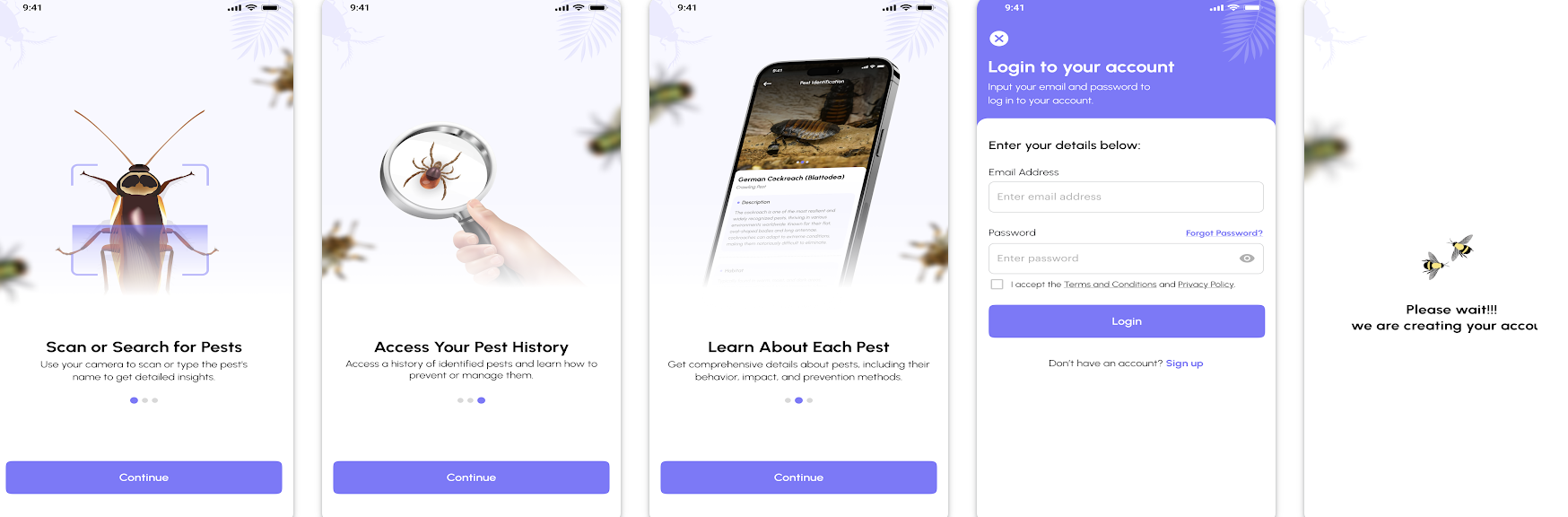
Fort Pest ID (AI mobile app): Launched in 2025, the app identifies common household pests from a single photo and recommends a product or treatment path.
That seasonal spread matters. Because the brands peak at different points in the year, the portfolio is built to generate demand across multiple quarters rather than leaning on a single busy season.
The AI Angle
The Fort Pest ID app is the newest piece of the story, and it does something the physical products can't.
By letting a customer snap a photo and receive an identification plus a recommended treatment path, the app extends Fort's brand from physical shelves into customer-facing software. Just as important, the data it generates feeds back into the company's product development roadmap — helping Fort see which pests customers are actually dealing with. The app is available globally and falls under the EU AI Act for compliance.
How Fort Sources and Operates
Fort runs a white-label sourcing model. Third-party manufacturers in China, the United Kingdom, and Italy produce products to Fort's specification, with no exclusivity agreements tying the company to a single supplier.
The sourcing mix has shifted meaningfully:
In FY2025, Fort sourced roughly 47% of its products from China and 53% from the United Kingdom.
That marks a substantial diversification from the all-UK base it operated from in 2023.
Final assembly, packing, and distribution take place at two leased warehouses in the United Kingdom.
The operations team is UK-based.
Spreading manufacturing across multiple countries can reduce reliance on any single region — a consideration that has grown more relevant for e-commerce companies navigating shifting trade conditions.

Regulated and Audited
For a small company, Fort carries a fairly substantial corporate and compliance framework:
Product regulation: Compliance with EU and UK Biocidal Products Regulations (BPR) and REACH through its supplier base.
Data & AI: GDPR and UK GDPR for customer-facing tools, plus EU AI Act coverage for the Fort Pest ID app.
With access to U.S. equity markets, Fort Technology can begin to think more seriously about research and development investment in ways that weren't previously feasible. The pest control industry is undergoing a significant transformation as both consumers and regulators push for more environmentally responsible products. The era of broad-spectrum chemical pesticides applied without much discrimination is giving way to a more sophisticated approach — targeted treatments, biopesticides derived from natural organisms, precision delivery systems that minimize chemical exposure while maximizing effectiveness. Companies that can develop and commercialize the next generation of these products stand to capture substantial market share as the industry evolves. For Fort Technology, capital from U.S. investors could fund exactly this kind of innovation pipeline.
There is also the acquisition angle, which may ultimately be where the most compelling long-term value creation happens. The pest control manufacturing market is highly fragmented. Thousands of smaller, regional companies operate across North America, each with its own customer relationships, product specializations, and geographic footprints. Many of these companies are well-run but undersized — they lack the capital and the management infrastructure to grow beyond their local or regional markets. For a well-capitalized acquirer with a national or continental platform, these companies represent attractive targets. Fort Technology, with the enhanced profile and financial flexibility that a Nasdaq listing can provide, is now at least theoretically positioned to play that consolidation role.
What Fort Technology's move illustrates, more broadly, is the persistent challenge and opportunity that small-cap Canadian companies face in an increasingly globalized capital market. Canada has no shortage of innovative, well-managed companies operating in sectors with legitimate growth potential. But the Canadian equity market — and particularly the TSX Venture Exchange, which serves as a kind of entrepreneurial springboard for smaller companies — has real limits in terms of the scale of capital it can provide and the breadth of investor interest it can attract. Companies that want to truly scale — that want to move from regional players to continental or global competitors — often find that they need to access U.S. markets at some point in their journey.
Fort Technology has now taken that step. The pest control industry may not be anyone's idea of a glamorous investment category, but it is a real business with real demand and real competitive dynamics, and a company that can successfully position itself as the leading innovator and consolidator in that space will generate substantial value over time. The Nasdaq listing is not the finish line — it's a starting point. How Fort Technology uses the capital it can now access, how it builds its American investor base, and how it executes on the strategic opportunities that its improved financial position makes possible — all of that remains to be seen.
MANAGEMENT

Sincerely,

DISCLAIMER
THIS WEBSITE/NEWSLETTER IS A PUBLICATION OF ONE22 MEDIA, LLC, HEREIN REFERRED TO AS O22. O22’S REPORTS/RELEASES ARE A COMMERCIAL ADVERTISEMENT AND ARE FOR GENERAL INFORMATIONAL PURPOSES ONLY.O22 IS ENGAGED IN THE BUSINESS OF MARKETING AND ADVERTISING COMPANIES FOR MONETARY COMPENSATION.
O22 HAS BEEN COMPENSATED A FEE OF TWENTY THOUSAND USD BY A THIRD PARTY, LFG EQUITIES CORP FOR A ONE DAY FRTT PROFILE ON 6/16/26 ON BEHALF OF FORT TECHNOLOGY INC.
BY SUBSCRIBING TO OR OTHERWISE USING THIS WEBSITE/NEWSLETTER, YOU AGREE TO HOLD O22 AND ITS OPERATORS, OWNERS, AND EMPLOYEES HARMLESS AND TO COMPLETELY RELEASE THEM FROM ANY AND ALL LIABILITY DUE TO ANY AND ALL LOSS, DAMAGE, OR INJURY THAT YOU MAY INCUR, MONETARY OR OTHERWISE.
INVESTING IN MICRO-CAP AND GROWTH SECURITIES IS HIGHLY SPECULATIVE AND CARRIES AN EXTREMELY HIGH DEGREE OF RISK. NEVER INVEST IN ANY STOCK FEATURED ON O22’S SITE OR NEWSLETTER UNLESS YOU CAN AFFORD TO LOSE YOUR ENTIRE INVESTMENT. THE DISCLAIMER IS TO BE READ AND FULLY UNDERSTOOD BEFORE USING O22’S SERVICES, JOINING O22’S SITE OR EMAIL/BLOG LIST, OR FOLLOWING ANY SOCIAL NETWORKING PLATFORMS O22 MAY USE.
PLEASE NOTE WELL: O22 IS NOT A REGISTERED INVESTMENT ADVISOR, BROKER DEALER OR A MEMBER OF ANY ASSOCIATION FOR OTHER RESEARCH PROVIDERS IN ANY JURISDICTION WHATSOEVER. O22 IS NOT AFFILIATED WITH ANY EXCHANGE, ELECTRONIC QUOTATION SYSTEM, THE SECURITIES AND EXCHANGE COMMISSION, OR FINRA. NONE OF THE MATERIALS OR ADVERTISEMENTS HEREIN CONSTITUTE OFFERS OR SOLICITATIONS TO PURCHASE OR SELL SECURITIES OF THE COMPANIES PROFILED.
THE INFORMATION CONTAINED HEREIN IS BASED ON INFORMATION SUPPLIED BY THE COMPANIES PROFILED, PUBLICLY AVAILABLE INFORMATION, PRESS RELEASES, AND OTHER SOURCES WHICH O22 BELIEVES TO BE RELIABLE, BUT IS NOT GUARANTEED BY O22 AS BEING ACCURATE AND DOES NOT PURPORT TO BE A COMPLETE STATEMENT OR SUMMARY OF THE AVAILABLE DATA. O22 IS NOT RESPONSIBLE FOR ANY CLAIMS MADE BY THE COMPANIES PROFILED. INVESTORS SHOULD NOT RELY ON THE INFORMATION CONTAINED IN THIS WEBSITE/NEWSLETTER IN DECIDING TO INVEST OR MAKE OTHER FINANCIAL DECISIONS. RATHER, INVESTORS SHOULD USE THE INFORMATION CONTAINED IN THIS WEBSITE/NEWSLETTER AS A STARTING POINT FOR DOING ADDITIONAL INDEPENDENT RESEARCH ON THE FEATURED COMPANIES. O22 STRONGLY ENCOURAGES READERS AND INVESTORS TO CONDUCT A COMPLETE AND INDEPENDENT INVESTIGATION OF THE RESPECTIVE COMPANIES, INCLUDING BY REVIEWING SEC FILINGS (FORMS 10-Q, 10-K, 8-K, 3, 4, 5, SCHEDULE 13D) AND BY CONSULTING YOUR OWN TAX, BUSINESS, FINANCIAL, AND INVESTMENT ADVISORS.
THE PRIVATE SECURITIES LITIGATION REFORM ACT OF 1995 PROVIDES A SAFE HARBOR IN REGARD TO FORWARD-LOOKING STATEMENTS. ANY STATEMENTS THAT EXPRESS OR INVOLVE DISCUSSIONS WITH RESPECT TO PREDICTIONS, EXPECTATIONS, BELIEFS, PLANS, PROJECTIONS, OBJECTIVES, GOALS, ASSUMPTIONS OR FUTURE EVENTS OR PERFORMANCE ARE NOT STATEMENTS OF HISTORICAL FACT, AND MAY BE FORWARD-LOOKING STATEMENTS. FORWARD-LOOKING STATEMENTS ARE BASED ON EXPECTATIONS, ESTIMATES, AND PROJECTIONS AT THE TIME THE STATEMENTS ARE MADE THAT INVOLVE A NUMBER OF RISKS AND UNCERTAINTIES WHICH COULD CAUSE ACTUAL RESULTS OR EVENTS TO DIFFER MATERIALLY FROM THOSE PRESENTLY ANTICIPATED. FORWARD-LOOKING STATEMENTS MAY BE IDENTIFIED THROUGH USE OF WORDS SUCH AS PROJECTS, FORESEES, EXPECTS, ANTICIPATES, ESTIMATES, BELIEVES, UNDERSTANDS, MAY, COULD, OR MIGHT. THERE IS NO GUARANTEE THAT PAST PERFORMANCE WILL BE INDICATIVE OF FUTURE RESULTS.